



How Technology Is Changing the Esthetic Consultation
By Aurora Solis
For decades, the esthetic consultation has relied heavily on what can be seen, felt, and learned through conversation. A magnifying lamp, trained hands, thoughtful questions, and the esthetician’s own understanding of the skin have traditionally provided the foundation for creating a treatment plan. Those skills remain essential. But today, estheticians have access to an entirely new layer of information.
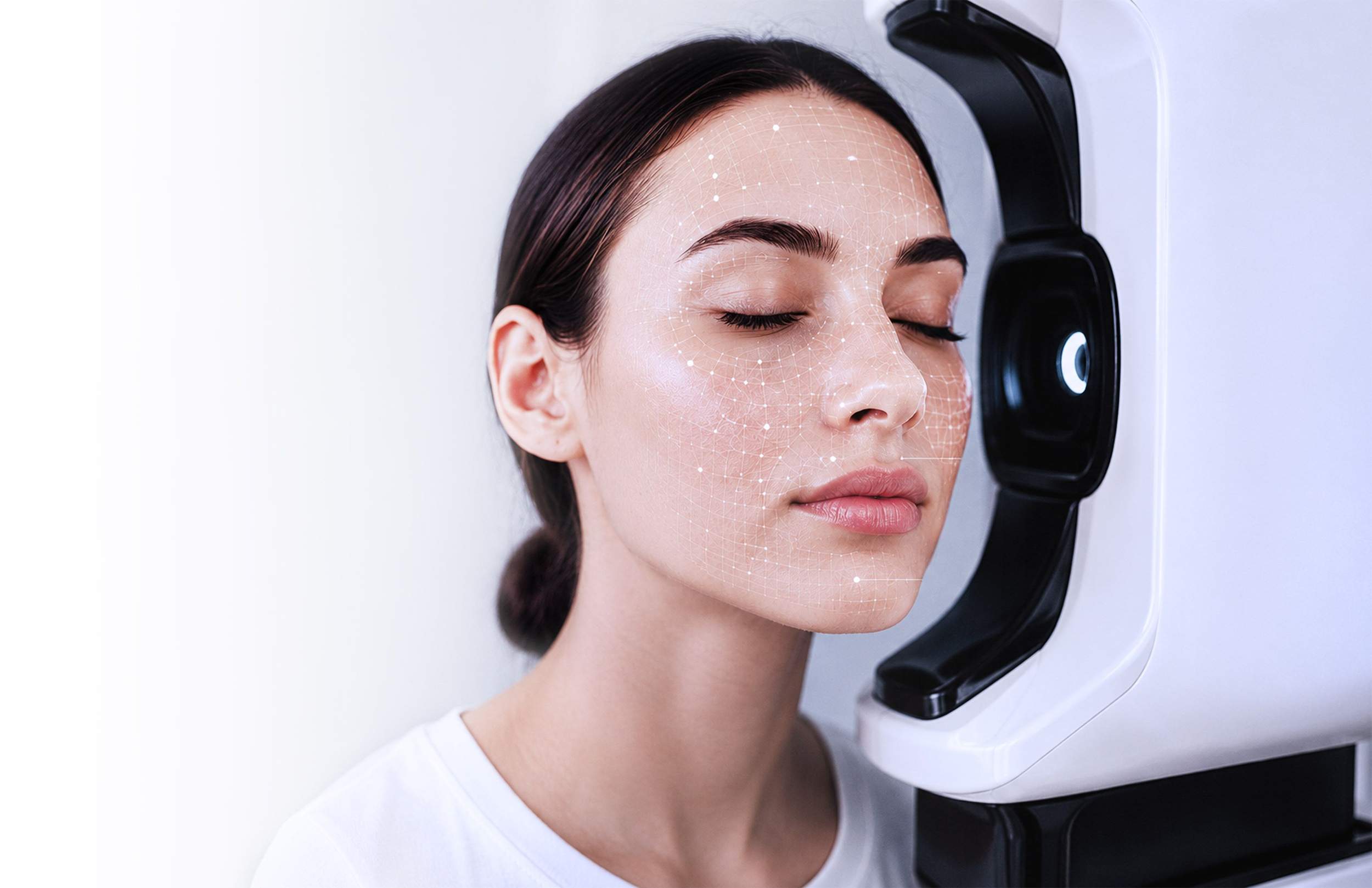
Digital imaging systems, advanced magnification, UV photography, hydration and sebum measurements, and AI-assisted skin analysis are changing what can happen before a client ever gets onto the treatment table. Technology can reveal patterns that may be difficult to see with the naked eye, document subtle changes over time, and help translate what an esthetician sees into something the client can understand. The consultation is becoming more visual, measurable, and data-informed. Still, the most important piece of the analysis has not changed: the professional interpreting the information.
Beyond What We Can See
The skin tells a story, but not all of that story is immediately visible. Traditional visual analysis allows an esthetician to observe concerns such as congestion, redness, texture, dehydration, pigmentation, and visible signs of aging. Magnification can provide a closer look, while touch can offer additional information about texture, oil production, sensitivity, and overall skin condition.
Newer technologies can add another dimension. Digital skin imaging may capture high-resolution photographs that allow both the esthetician and client to examine the skin more closely. UV imaging can help visualize certain pigmentation and sun-related changes that may not yet be as apparent on the surface. Other systems can assess factors such as hydration or surface oil levels.
AI-assisted platforms are adding yet another layer by analyzing images and identifying visible patterns across different areas of the face. Depending on the system, the technology may help categorize concerns, organize observations, or create visual reports that can be referenced during a consultation. The benefit is not that technology suddenly understands the skin better than the esthetician. It is that the esthetician may now have more information to consider.
Turning the Consultation Into a Conversation
One of the greatest opportunities these tools provide is client education. Clients do not always see what an esthetician sees. They may know their skin feels dry or that they are experiencing breakouts, but they may not understand the difference between dryness and dehydration, why congestion repeatedly appears in certain areas, or why correcting a concern may require a series of treatments rather than one appointment.
Visual technology can make these conversations easier. Instead of simply telling a client what you observe, you may be able to show them. An enlarged image can help explain texture or congestion. Side-by-side photographs can demonstrate gradual improvement. Hydration measurements can create a starting point for conversations about barrier support.
This can shift the consultation from the esthetician prescribing a solution to the esthetician and client looking at the skin together. When clients better understand the reasoning behind a recommendation, treatment plans and home care can feel more intentional rather than transactional.
Creating a Baseline for Progress
Skin changes slowly, and clients see themselves every day. That can make gradual improvement surprisingly difficult for them to recognize. Consistent imaging creates a baseline.
Photographs taken under similar conditions at the beginning of a treatment series can later be compared with images taken after several weeks or months. This can be particularly useful when working with concerns such as acne, pigmentation, texture, dehydration, or visible signs of aging.
Documentation also encourages the esthetician to evaluate the treatment plan objectively. Is the skin responding the way you expected? Should the protocol continue? Does something need to be adjusted?
Progress does not always mean dramatic before-and-after photographs. Sometimes it is less visible inflammation, fewer recurring breakouts, improved hydration, more even tone, or a healthier-looking barrier. Technology can help capture those smaller shifts and give clients a clearer picture of how far their skin has come.
Personalization Over Protocol
More information can also support more thoughtful customization. Two clients may walk into the treatment room asking for the exact same facial while presenting with very different skin conditions. Even the same client’s skin can change based on season, environment, lifestyle, home care, stress, and recent treatments.
Skin analysis technology can provide another reference point when deciding what the skin may need that day. That does not mean allowing a device to dictate the entire treatment. Instead, its findings can be considered alongside the consultation, the client’s history, visual and tactile assessment, professional scope, and the esthetician’s knowledge of ingredients and modalities. Technology should support critical thinking, not replace it.
Where Does AI Fit?
Artificial intelligence is likely to become an increasingly common part of professional beauty, including skin analysis. That makes understanding its role especially important.
AI can process images quickly and organize large amounts of visual information. It may help highlight patterns or create reports that make consultations more engaging. What it cannot fully understand is the person sitting in front of you.
An image does not tell you everything about a client’s lifestyle, sensitivities, treatment history, habits, expectations, or relationship with their skin. Technology also has limitations, and results can be affected by factors such as image quality, lighting, device design, and the data used to develop a system.
Estheticians should therefore treat AI-generated findings as information to evaluate rather than unquestionable conclusions.
The professional remains responsible for asking questions, recognizing contraindications, staying within scope of practice, and determining whether a recommendation actually makes sense for that individual client.
Expertise Is Still the Most Important Tool
The future of skin analysis will likely include more data, better imaging, increasingly sophisticated software, and technologies we have not yet introduced into the average treatment room. But more information does not automatically create better outcomes.
A sophisticated skin analysis system can identify or highlight something on an image, but the esthetician must understand what that information means within the context of the client’s skin. A hydration measurement may provide a number, but professional knowledge determines what to do with it. A digital image may reveal a pattern, but experience guides the questions that should come next. That distinction will become even more important as technology continues to advance.
The aesthetic consultation of the future may be more high-tech than ever before, but it should also become more thoughtful, personalized, and educational. The goal is not to replace the esthetician’s eye with a machine. It is to give that trained eye another way to see. Technology can provide the information. Expertise is what turns that information into care.
Read More…
-

The Holiday Booking Conversation Starts Now
30 September, 2026 -

Make Memberships Feel Relevant in Fall
30 September, 2026 -
Are Seasonal Specials Actually Profitable?
30 September, 2026 -

The Treatment Room Upgrade Guide
31 August, 2026 -

The New Era of Skin Analysis
31 August, 2026 -

High-Tech, High-Touch
31 August, 2026 -

Why Emotional Safety Is Becoming the New Luxury
31 July, 2026 -

Creating Signature Rituals That Define Your Brand
31 July, 2026