



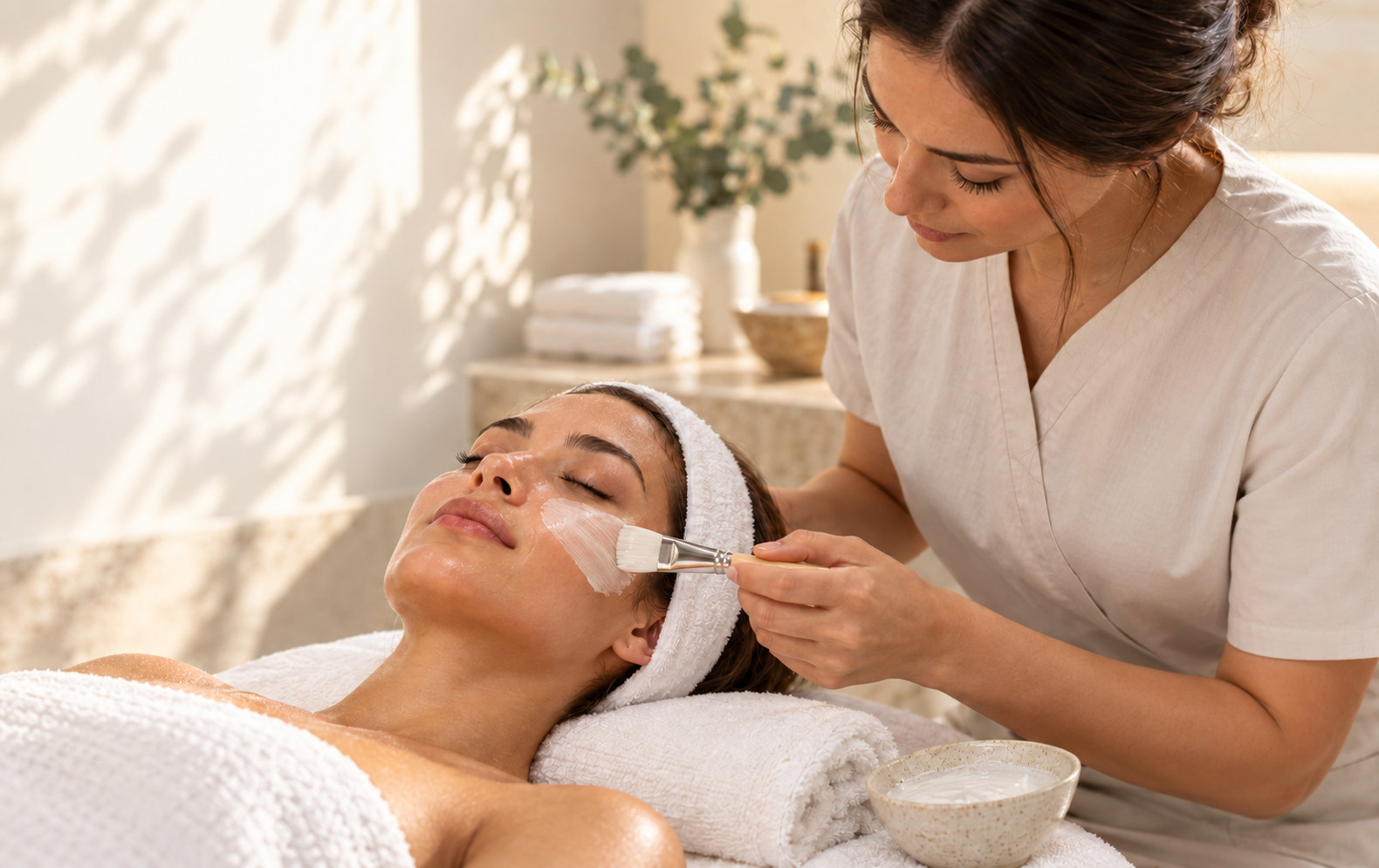
How to compare discounts, treatment series, and value-added upgrades before launching a fall promotion
By Samantha Garcia
A seasonal special can fill an appointment slot, introduce a new treatment, and give clients a reason to reconnect. It can also quietly reduce what you earn from a service you were already booking at full price. Before you put a fall facial on your menu, decide what the offer is meant to . Are you trying to bring inactive clients back, introduce peels to existing facial clients, sell a series, or fill a slow weekday? The answer determines whether the special makes financial sense.
Start with the numbers behind the appointment. For every proposed offer, record its selling price, treatment time, consumables, payment fees, provider compensation, and any products or gifts included. Then consider the value of the room and provider time: could that same slot have been sold as a regular service? A full calendar can still produce disappointing revenue when too many prime appointments are sold below their normal contribution.
Consider a simplified example. Your standard facial is $200. Consumables, processing, and provider compensation total $65, leaving $135 before rent, utilities, marketing, and other overhead. A 20 percent seasonal discount brings the price to $160, but those $65 in costs do not disappear. The remaining contribution falls to $95. That is $40 less per appointment, or $400 across ten appointments. These are example figures; substitute your own costs before making a decision.
When a limited-time discount works
A discount can serve a clear purpose when it reaches people who would not otherwise have booked that slot. Think about a weekday opening, a first visit with a defined follow-up opportunity, or a short campaign for clients who have not visited in months. Set a start and end date, limit the number of appointments if capacity is tight, and decide how you will measure success. New bookings alone are not the whole story. Watch how many guests rebook at the regular price and whether the campaign displaces full-price clients.
Be careful with broad discounts on your busiest days. If a client would have booked their usual October facial anyway, the promotion changes your revenue without changing their behavior. It can also train clients to wait for the next seasonal offer. When you do discount, make the reason specific and the offer easy to understand. A promotion with multiple exclusions and complicated add-ons can create more friction than bookings.
When a series makes sense
A series works best when the treatment goal genuinely benefits from several visits and the client is a suitable candidate for the planned services. A fall peel plan, for example, may involve consultation, preparation, treatment visits, and home care guidance. Price the entire plan based on the work involved, including any follow-up communication or assessment time. A package price should be intentional; calling it a series does not automatically make a steep discount profitable.
Series can help with scheduling and cash flow, but a prepaid payment is not the same as earned profit. You still owe the client the future appointments. Reserve the time and product costs needed to deliver them, establish clear expiration and cancellation terms consistent with local rules, and track how many visits remain. Avoid promising a specific outcome by a specific date. Skin response, adherence, and treatment tolerance vary.
The case for a value-added upgrade
Sometimes the strongest seasonal offer keeps the core price intact and adds something clients can actually feel or use. That might be extra consultation time, a targeted mask, a brief LED session where appropriate, or a small home-care product. Choose an addition that fits your protocol and price it honestly. “Complimentary” does not mean free to the business: five extra minutes across a full day and a product with real cost both affect your margin.
Using the earlier example, a $200 facial with an upgrade costing $12 in product and time leaves $123 before overhead, compared with $95 for the discounted facial. The value-added version may be more profitable while giving the client a distinct seasonal experience. It only works if the added step matters to the client, is suitable for their skin, and does not turn a 60-minute booking into an 80-minute appointment.
Decide what success looks like
Before launching, write down one objective and three measures. If the goal is to fill quiet Tuesday afternoons, track appointments in those slots, contribution per appointment, and repeat bookings. If the goal is to introduce corrective treatments, track consultations, appropriate series enrollments, and return visits. Compare the results with a normal month, keeping holidays and schedule changes in mind.
A seasonal menu should reflect your expertise rather than force every client into the same fall protocol. A guest with a stressed barrier may need a supportive facial instead of a peel; an established peel client may be ready for a carefully planned series. The most profitable special is one you can deliver well, explain clearly, and recommend with confidence. When the promotion ends, you should have stronger client relationships and a clearer picture of what each appointment actually earns.
Read More…
-

The Holiday Booking Conversation Starts Now
30 September, 2026 -

Make Memberships Feel Relevant in Fall
30 September, 2026 -
Are Seasonal Specials Actually Profitable?
30 September, 2026 -

The Treatment Room Upgrade Guide
31 August, 2026 -

The New Era of Skin Analysis
31 August, 2026 -

High-Tech, High-Touch
31 August, 2026 -

Why Emotional Safety Is Becoming the New Luxury
31 July, 2026 -

Creating Signature Rituals That Define Your Brand
31 July, 2026